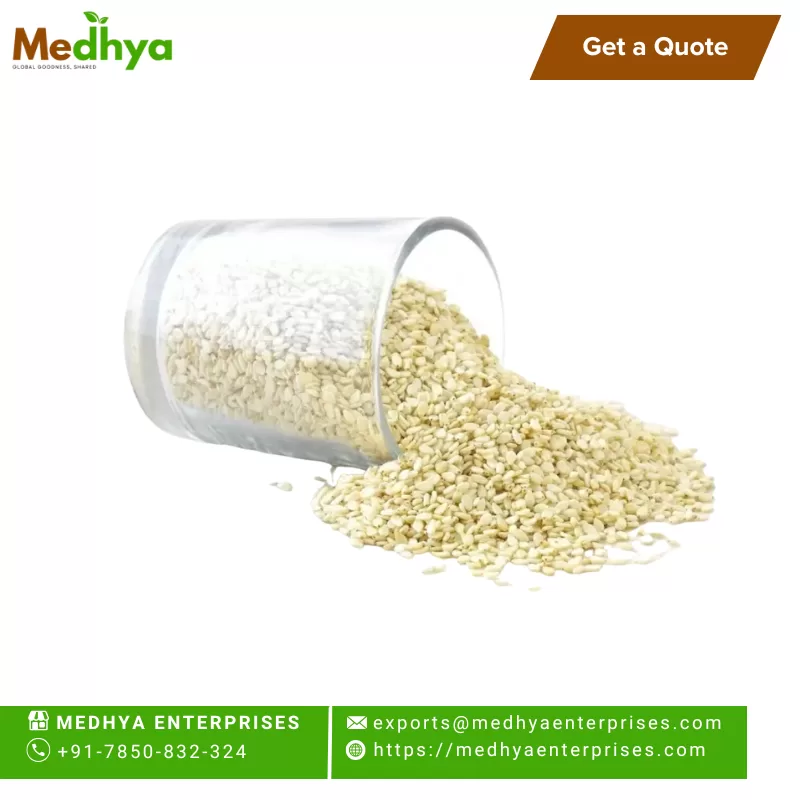
High Grade Bold Sesame Seeds | Natural White, Unhulled | Cleaned & Packaged for Bulk Export India | Superior Taste & Oil Yield
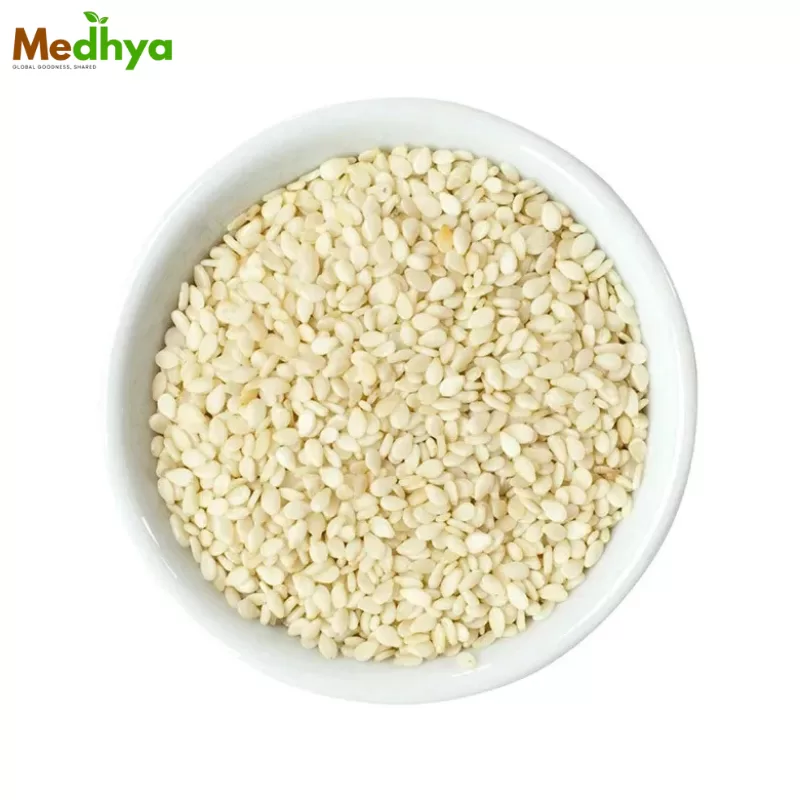
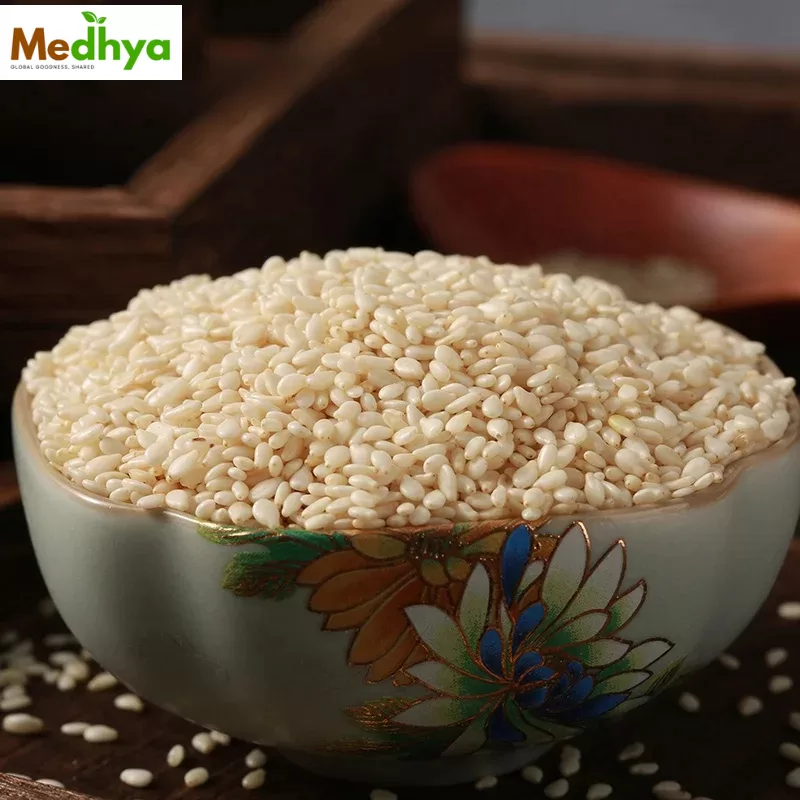
At Medhya Enterprises, we specialize in exporting high-quality bold sesame seeds known for their rich oil content, nutty flavor, and exceptional purity. Sourced from trusted Indian farms, our sesame seeds are sun-dried, natural, and unhulled—ideal for oil extraction, food processing, and culinary applications worldwide. With strict quality control and customized packaging options, we ensure timely delivery and consistent excellence for global clients seeking reliable bulk suppliers.
Product Specifications
Sesame seeds are highly valued for their nutritional content and versatility in various culinary applications.1 Here are some key specifications often considered for sesame seeds, broadly categorized:
I. Physical Properties:
Size: Approximately 3-4 millimeters long, 2 millimeters wide, and 1 millimeter thick.2
Shape: Ovate, slightly flattened, and somewhat thinner at the hilum (eye of the seed) than at the opposite end.3
Weight: Typically between 20 and 40 milligrams per seed.
Color: Varies by cultivar. Off-white is the most commonly traded variety, but other colors include buff, tan, gold, brown, reddish, gray, and black.4 Hulled sesame seeds are typically off-white.
Seed Coat (Testa): Can be smooth or ribbed.5
Flavor/Taste: Mild, nutty aroma, and slightly buttery taste.6
Odor: Mild, sweet, and slightly earthy.
II. Chemical & Quality Parameters:
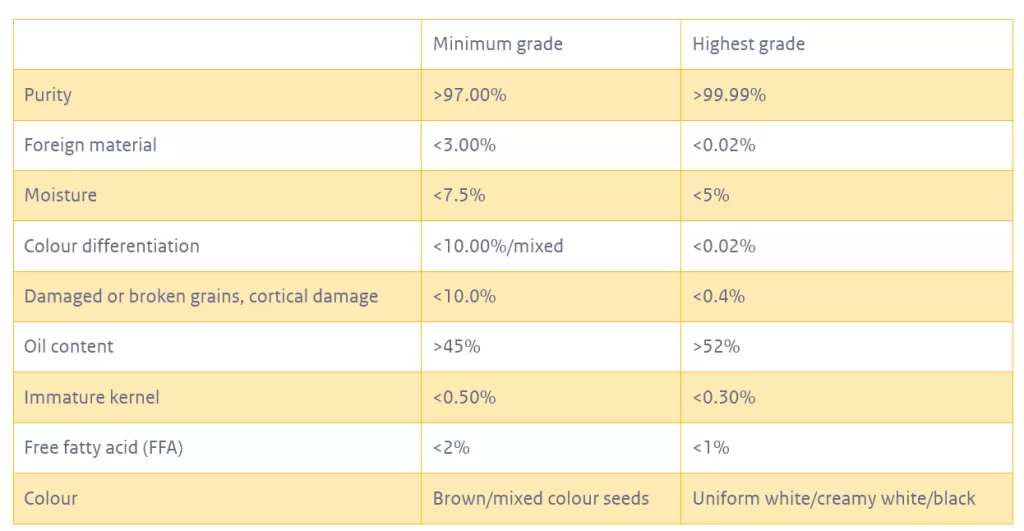
Purity: Generally ranges from 98% to 99.5% minimum for natural sesame seeds, and higher for hulled varieties (e.g., 99.9% or 99.98%).7 This refers to the absence of foreign matter.
Moisture Content: Typically 6% to 8% maximum. Lower moisture content is preferred for better shelf life and to prevent mold growth.
Foreign Matter: Usually 1% to 2% maximum. This includes any material other than sesame seeds.
Oil Content: A crucial specification, typically ranging from 45% to 50% minimum. Higher oil content is generally preferred.
Free Fatty Acids (FFA): Generally 1.5% to 2% maximum (as oleic acid). Lower FFA indicates better quality and freshness.
Pesticide Residues: Should be within permissible limits or ideally none, especially for export to sensitive markets like the EU.
Microbiological Standards:
Salmonella: Absent in 25g (especially critical for EU exports).8
Other microbial counts (e.g., aerobic mesophilic count, mould count, coliform count, Escherichia coli) are also often tested to ensure food safety.9
Aflatoxins: Should be within safe limits.
Heavy Metals: Lead, Arsenic, Iron, Copper, etc., should be within specified maximum limits.
Admixture: Low percentages (e.g., 1% max) for other colored seeds or damaged seeds.
III. Nutritional Content (per 100 grams, approximate values may vary):
Energy: Around 573 kcal
Total Fat: 50-61.7g (rich in unsaturated fatty acids: polyunsaturated and monounsaturated)
Saturated Fat: ~7g10
Protein: 18-21.9g (complete protein with essential amino acids like methionine and tryptophan)
Carbohydrates: 23-25g
Dietary Fiber: 11-12g
Minerals:
Calcium: Very high (e.g., 1450mg for unhulled, much less for hulled as calcium is mostly in the hull)
Iron: 9.3mg
Magnesium: High
Phosphorus: High
Zinc: High
Manganese: High
Copper: High
Selenium
Vitamins:
Vitamin B1 (Thiamin)11
Vitamin B6
Vitamin E
Folate
Phytochemicals: Lignans (sesamin, sesamolin), phytosterols, tocopherols, which contribute to antioxidant and anti-inflammatory properties.12
IV. Packaging & Storage:
Packaging: Typically in clean jute bags, multiwall paper bags, or polypropylene (PP) bags, often with plastic liners, ranging from 15kg to 50kg. Vacuum-packed smaller bags are also available.
Storage: Should be stored in a clean, dry, and cool area, ideally below 75% relative humidity and less than 18°C, to maintain quality.13
Shelf Life: Generally 12 to 24 months when stored properly.
V. Types of Sesame Seeds:
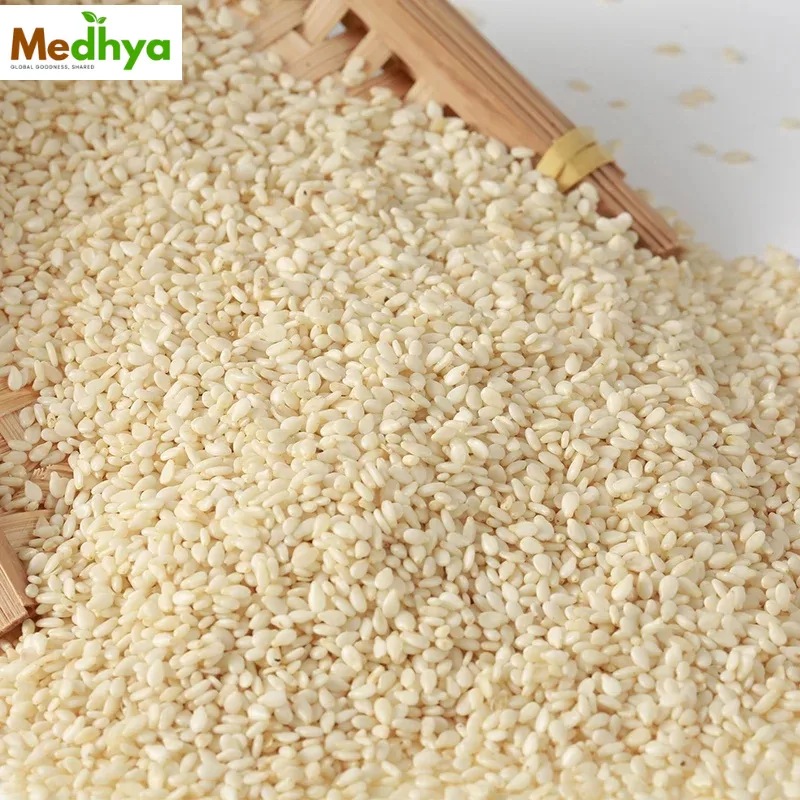
Natural Sesame Seeds: Unhulled, with the outer skin intact.
Hulled Sesame Seeds: The outer husk (skin) is removed, resulting in a whiter seed. These are often preferred for bakery and confectionery products where a lighter color is desired.
Black Sesame Seeds: A distinct variety with a black seed coat, often prized for different nutritional profiles and culinary uses.14
Roasted Sesame Seeds: Can be either hulled or unhulled, and are roasted to enhance their nutty flavor.15
These specifications are crucial for trade, quality control, and ensuring the sesame seeds meet the requirements for various food and industrial applications. Exporters and importers often rely on these parameters, sometimes adhering to international standards (though specific ISO standards for raw sesame seeds are less common than for derived products like sesame oil or flour).
Your Trusted Partner for Premium Sesame Seed Export
- Rooted in India, Reaching the World We export bold sesame seeds that embody purity, freshness, and exceptional quality straight from Indian farms.
- Custom Packaging & Bulk Orders Whether you need branded packs or bulk loads, we tailor our packaging to suit your business needs.
- Seamless Global Logistics Our robust export experience ensures your shipment arrives on time and in perfect condition.
- Unmatched Product Purity Our seeds are sun-dried, unhulled, and rigorously cleaned—perfect for oil pressing, food processing, or culinary use.
- Customer-First Culture We believe in long-term partnerships built on transparency, responsiveness, and consistent value.